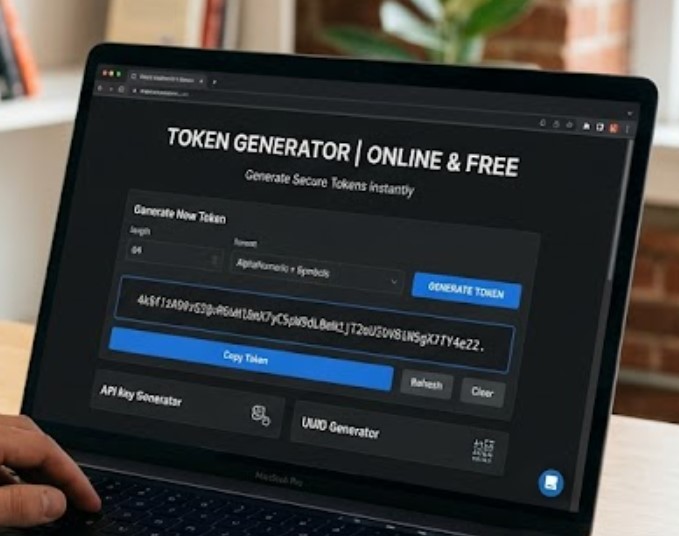
Token Generator
The Ultimate Guide to Token Generators: Types, Uses, and Tips
Token Generator is everywhere in modern software, from authentication and API security to blockchain assets and AI‑generated memecoins. A token maker or creator is a tool, library, or service that quickly and reliably creates these tokens. This guide explains the most common types of token generators, their practical uses, and expert tips for using them safely.
More Useful Tools:- Epoch Converter: To Instantly Convert Unix Timestamps to Human-Readable Dates
Secure Token Generator
Generate cryptographically secure random tokens, salts, and keys for your applications.
What Is a Token Generator?
A token generator produces a string of characters (a “token”) that represents something unique a user session, an API key, a cryptocurrency, or a temporary access right. Depending on the context, tokens can be random, cryptographically signed, or even smart contracts on a blockchain.
Below, we break down the most searched token‑generator tools and types with use cases and actionable advice to follow while using our tools online for free.
Other Tools:- Decimal to Binary Converter
General & Random Token Generators
These are the simplest tools. They generate random alphanumeric or hexadecimal strings. They’re used for session IDs, password reset links, or any scenario needing a unique token generator that is hard to guess. These may be used for
Creating temporary share links
Generating invitation codes or coupon IDs
Producing non‑cryptographic unique identifiers (e.g., for database rows)
For security, always use a high-entropy token generator (e.g., secrets.token_urlsafe() in Python).
Avoid simple rand() functions — use cryptographically secure pseudorandom number generators (CSPRNGs).
Online token generator tools are convenient for testing, but never paste real sensitive data into a web form unless it’s a trusted local tool.
Authentication & API Tokens
These generate tokens for securing APIs and web applications.
JWT (JSON Web Token) generator creates encoded, signed tokens containing claims (e.g., user ID, expiration).
API key generator produces long, random strings used as credentials.
CSRF token generator creates unpredictable tokens to prevent cross‑site request forgery.
Refresh token generator issues longer‑lived tokens that can be used to obtain new access tokens.
Access token generator – gives temporary access to an API (e.g., OAuth2).
Bearer token generator – creates tokens that any bearer can present (common in REST APIs).
CSRF token generator – embedded in web forms to validate requests.
Always set a short expiration for access tokens (minutes to hours). Use a refresh token generator to obtain new ones without re‑login.
For JWTs, never store secrets in client‑side code. Use strong signing algorithms (RS256 over HS256 where possible).
Generate api key generator values with at least 32 bytes of random data.
Use a mock JWT token generator during development to test without a real authentication server.
Blockchain & Crypto Token Generators
These tools help you create a cryptocurrency token on a blockchain without writing smart contracts from scratch.
ERC20 token generator – for Ethereum‑compatible tokens (e.g., on Polygon, Arbitrum).
BEP20 token generator – for Binance Smart Chain (BNB Chain).
Solana token generator – for Solana’s SPL token standard.
Meme coin generator – simplified UI to quickly launch a community token with custom branding.
Launching a utility token for a DeFi project.
Creating a fake crypto token generator (for testing) to simulate transactions on testnets.
Experimenting with tokenomics (supply, minting, burning).
Test thoroughly on testnets (Goerli, Sepolia, BSC Testnet) using a fake crypto token generator for testing before mainnet.
Avoid “free token generator” websites that ask for your private keys — they are scams.
For genuine deployment, use audited libraries like OpenZeppelin.
Meme coin generator tools are popular for hype tokens, but be aware of legal and security risks.
Useful Daily Tools:- Hijri Calendar To Gregorian Date Converter
AI‑Powered Token Generators:
ai token generator, ai meme token generator, ai crypto token generator
A recent trend: using large language models or generative AI to automate token creation.An
AI token generator can write smart contract code, generate token metadata, or even create full token websites.
AI meme token generator suggests names, logos, and viral marketing copy for memecoins.
Rapid prototyping of token ideas.
Generating documentation and tokenomics spreadsheets.
Creating engaging content for a token launch.
AI output must be reviewed by a human (especially smart contracts — bugs can be costly).
Do not rely on AI for security‑critical parameters (e.g., random number generation).
Combine AI crypto token generator with manual audits.
Programmatic & Library‑Based Token Generation
generate token python, token generator javascript, token generation library
Developers often need token generation inside their own code.
Generate token python – using secrets, jwt, itsdangerous, or web3.py.
Token generator JavaScript – using crypto.randomBytes() or jsonwebtoken library.
Token generation library – e.g., pyjwt, node-jose, authlib.
Integrating token generation into a backend service.
Building custom authentication flows.
Creating one‑time passwords (OTP) or invite links.
In Python: secrets.token_urlsafe(32) for secure random tokens; jwt.encode() for JWTs.
In JavaScript: crypto.randomBytes(32).toString(‘hex’).
Use a well‑maintained token generation library instead of reinventing crypto.
Reliable Tools:- IBAN Generator Pakistan Online
Specialised & Testing Tokens
mock jwt token generator, password reset token generator, secure random token generator
Mock JWT token generator – creates fake JWTs for unit testing or local development (often with no algorithm or hardcoded claims).
Password reset token generator – produces short‑lived, single‑use tokens sent by email.
Secure random token generator – the gold standard for anything security‑sensitive.
Testing API middleware without a real identity provider.
Implementing “forgot password” flows.
Generating recovery codes.
Password reset token generator tokens must expire in 15–30 minutes and be invalidated after use.
For a secure random token generator, prefer OS‑level entropy (/dev/urandom or CryptGenRandom).
Mock JWT token generator should never be used in production — it bypasses signature verification.
General Tips for Any Token Generator
Always use secure randomness – for production, never use Math.random() or random. randint without a CSPRNG.
Set expiration – even “infinite” tokens should have a rotation policy.
Store tokens safely – hash API keys like passwords; keep refresh tokens in httpOnly cookies.
Log and monitor token usage to detect anomalies.
Prefer established libraries – custom token generation is error‑prone.
In short, whether you need a JWT generator, an ERC20 token generator, or a simple random token generator, there’s a tool or library for every use case. Always match the generator’s security level to the sensitivity of your data. For blockchain tokens, test with a fake crypto token generator on testnets first. For web apps, rely on a secure random token generator and a CSRF token generator to stay safe.
Custom Tools:- 8171 ویب پورٹل – BISP GOV PK 8171 Check With CNIC